Xinhua
17 Jan 2026, 19:45 GMT+10
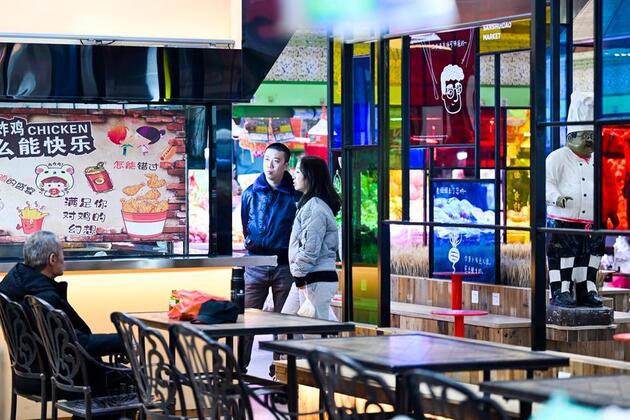
BEIJING, Jan. 17 (Xinhua) -- When Jin Lulu returned from studying abroad, she opened a cafe -- not in a glossy mall or office tower, but at the entrance of the 30-year-old Gudang market in east China's Zhejiang Province.
"I used to come here with my grandmother when I was little. Now I'm back opening a cafe here, and it feels so warm and nostalgic," Jin said.
Located in western Hangzhou, the provincial capital, Gudang market has recently become a popular spot. Many young visitors, even when pressed for time, pull their suitcases along just to stop by for a stroll.
"About 20 percent of our vendors were born in the 1990s and 2000s, and their presence has brought fresh energy," said Yu Hongmei, director of Gudang market. She added that the goal is to turn the traditional market into a community hub where people of all ages can find a sense of belonging.
After a nine-month renovation starting in 2024, the market emerged refreshed, modern and digital -- yet it retains its nostalgic charm. Inside striking old architecture, the space is bright and spotless, with patterned floor tiles complementing the colors of geometric stained-glass windows.
At its entrance, a large screen scrolls real-time information, including the number of stalls, prices, sales, top-selling booths, and food safety test results. Each stall is equipped to show prices, QR codes for payment, and vendor details at a glance.
And it is not just happening in Hangzhou. Across China, traditional wet markets are being renovated and upgraded, seamlessly weaving into modern community life, with many becoming "internet-famous" spots -- fueling the nationwide trend for the "market walk."
While strolling through these markets, visitors can also browse bookstores, sip coffee, enjoy light meals, and explore creative handicrafts, meeting both material needs and emotional desires at the same time.
In 2024, an action plan jointly issued by nine government departments, including the Ministry of Commerce, called for supporting the standardized renovation of traditional markets, enriching community services and business formats, and improving facilities and the overall environment.
In Hengyang, central China's Hunan Province, a traditional market has been upgraded into a "smart" market and introduced "vegetable doctors" who test produce for pesticide residues every morning.
In south China's Shenzhen, the Dongmen market is one of the city's oldest fresh-food and meat markets, nestled in the city center among high-rises and busy streets. It not only meets the daily needs of local residents but also draws shoppers from Hong Kong.
"Exploring a local market is one of the best ways to get to know a city. It's bustling, full of life, and rich in human connection," shared some netizens. Describing their habit of casually strolling through markets, they said they might wander to a nearby market after work as a simple way to relax and unwind.
On social platforms popular among young Chinese, the trend is gaining huge traction. The topic "market walk guide" has drawn nearly 120 million views on lifestyle-sharing platform Rednote, with more than 300,000 related posts.
In the past, such markets in China were once labeled as "dirty and chaotic," with wet floors, scattered vegetable leaves, and constant shouting from vendors.
Yet in both urban and rural China, markets have a long history. Over time, these market gatherings became the seeds around which cities gradually grew.
For a long time, wet markets served as the backbone of urban food distribution and a magnet for city life in China. Before supermarkets appeared, they were widespread and thriving. In recent years, however, the rise of neighborhood shops and online grocery platforms has put some traditional markets under pressure.
Industry estimates suggest there are tens of thousands of wet markets across the country, with Chengdu, Shanghai and Chongqing hosting the largest numbers.
"Traditional markets must change, or they won't survive," said Guan Jingjing, a professor at Zhejiang Gongshang University. She noted that, faced with pressure from supermarkets and online platforms, as well as the demands of urban renewal, traditional markets are increasingly losing foot traffic.
Upgrading through spatial redesign, visual refreshes, and diversified business offerings has become key to their transformation, Guan added.
Hong Yumeng, a graduate of the China Academy of Art, put this idea into practice in her thesis, developing a "market renovation plan" that reflects the younger generation's vision for the aesthetics of traditional market spaces.
In her proposal, renovated markets feature more logical functional zones, more engaging circulation paths, and thoughtful connections to surrounding environments -- completely overturning the old stereotype of dim, noisy and chaotic markets.
Hong said that young people are growing tired of standardized consumer spaces, and that markets redesigned with both local character and a strong sense of aesthetics are meeting their desire for social sharing and immersive experiences.
"Wet markets becoming a new favorite among young people is, at its core, a reshaping of their consumption habits and lifestyles," said Wang Peng, an associate researcher at the Beijing Academy of Social Sciences, in a media interview. He added that these markets allow young people to enjoy a more engaging, hands-on experience at a low cost.
At the same time, the everyday bustle of wet markets, together with the lively chatter in local dialects and memories shared across generations, has become an emotional anchor for many adults, Wang said.
These changes in markets and consumption patterns align with China's wider social and economic development goals. During the 15th Five-Year Plan period (2026-2030), China is making meeting the people's ever-growing needs for a better life its fundamental goal. A high-level Party meeting last year also stressed the importance to boost consumption while protecting and improving people's well-being.
While pursuing aesthetic upgrades and new business formats, markets must not lose their roots, Guan said, emphasizing that no matter how much they change, fresh produce, affordable prices, and convenient shopping remain the foundation for retaining longtime vendors and serving local residents.
Get a daily dose of China National News news through our daily email, its complimentary and keeps you fully up to date with world and business news as well.
Publish news of your business, community or sports group, personnel appointments, major event and more by submitting a news release to China National News.
More InformationNEW YORK CITY, New York: Google is pushing its AI chatbot deeper into online shopping, unveiling new partnerships with major retailers...
HONG KONG: China closed 2025 with its largest trade surplus on record, underscoring how exports to the rest of the world have cushioned...
NEW YORK, New York - U.S. stocks were unwanted Friday as President Donald Trump poured cold water on the potential appointment of National...
AUSTIN, Texas: Tesla will stop offering its full self-driving software as a one-time purchase and switch exclusively to a monthly subscription...
NEW YORK CITY, New York: After years of expansion fueled by debt and rising pressure from cautious luxury shoppers, Saks Global has...
NEW DELHI, India: The U.S. ambassador-designate to New Delhi, Sergio Gor, said on January 12 that the United States and India are working...
HONG KONG: China closed 2025 with its largest trade surplus on record, underscoring how exports to the rest of the world have cushioned...
BEIJING, Jan. 17 (Xinhua) -- When Jin Lulu returned from studying abroad, she opened a cafe -- not in a glossy mall or office tower,...
Since the withdrawal of international forces and the Talibans return to power in August 2021, Afghanistans once-diverse media landscape...
London [UK], January 17 (ANI) The British government is nearing approval of a contentious proposal by China to establish what would...
(Photo credit: Ron Chenoy-Imagn Images) The Vegas Golden Knights extended their season-high winning streak to six games by rallying...
(260117) -- MELBOURNE, Jan. 17, 2026 (Xinhua) -- Former tennis player Roger Federer of Switzerland serves during the opening ceremony...