RFE
20 Jan 2026, 16:45 GMT+10
The European Union is slowly preparing a new round of sanctions on Russia, its 20th since the full-scale invasion of Ukraine, with the goal of having the measures approved by all EU member states at the end of February to coincide with the fourth anniversary of Moscows attack on its neighbor.
The idea is that the European Commission, which proposes new packages, will have its round of confessionals in which proposed new measures and potential red lines are discussed with member states as early as the upcoming weekend of January 24-25.
Few EU officials believe that the measures will be sweeping and hard-hitting given that unanimity is needed in the bloc and there is a reluctance in Brussels to go for measures that could also hurt the already spluttering European economy.
Some things, however, are clear: the EU will add more names to its visa ban and asset freeze blacklist, which already includes around 2,700 individuals and entities.
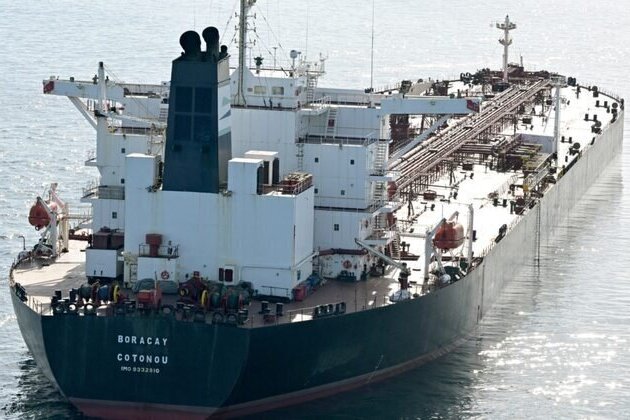
There will also be more vessels belonging to the Kremlins shadow fleet that will be slapped with an EU service ban -- with that list already comprising some 600 ships that Brussels thinks are carrying Russian oil in violation of an oil price cap imposed by the Group of Seven that now stands at $47.60 per barrel.
The EU estimated late last year that around 35 percent of all vessels transporting Russian oil did so in compliance with the oil price cap, while 65 percent were part of the shadow fleet violating the cap.
Perhaps the biggest potential new sanction is a so-called full maritime service ban against any ship transporting Russian carbon-based resources that would target both the above-mentioned categories.
This maritime ban has been put forward in informal discussion papers on further Russia sanctions authored respectively by Latvia, Lithuania, the Netherlands, and Sweden -- all seen by RFE/RL.
Now, this quartet are all known as sanctions hawks in the bloc, so the measure might not fly in the end, but RFE/RL understands that the idea is gaining traction in Brussels.
The idea of the ban is that it prohibits all EU economic operators in the bloc from providing services to any vessel transporting oil, gas, or coal from Russian ports.
This goes beyond the current price cap in several ways.
First, it includes gas and coal. Second, it would target all vessels, not only those already sanctioned. And third, the oils sale price becomes irrelevant.
In reality, this would stop EU vessels from transporting Russian energy completely while non-EU boats could continue but wouldnt be able to rely on EU port services and insurances.
Curiously, the Netherlands is also arguing for a way for shadow fleet vessels to be scrapped and recycled by creating an exit mechanism. Quite how this would work isnt spelt out in the Dutch paper, but it would likely involve big financial incentives for vessel owners to cooperate with EU port authorities rather than working for the Kremlin.
The documents by the quartet also propose other energy sanctions on Russia that are unlikely to be accepted considering they have been vetoed so far by various other EU capitals. These include sanctions on energy giant Rosneft and Lukoil, something that Britain and the United States have already imposed.
Similarly, there is still hesitation to hit Rosatom, Russias state-owned nuclear energy company even though there could be scope to target the companys leadership with sanctions, banning all new contracts with the firm and potentially even stopping uranium imports into the bloc from Russia, worth more than $116 billion a year, given that the EU could get it from other sources.
Lithuania is also arguing for sanctions on PipeChina, a company owned by Beijing that is involved in buying liquefied natural gas from Russia.
With Brussels increasingly open to showing that it can also target China for its financial and political support of Moscows war, this could potentially happen, even though many EU member states are wary about being too tough on Beijing due to the economic stakes involved and the fear of retaliation.
Expect instead that the new measures will focus on plugging gaps in sanctions already imposed by shortening phase-out dates for import bans on Russian iron, steel, and nickel from later this decade to potentially the end of this year.
Many also want to phase out Russian fertilizer imports, which the bloc imported to the tune of $1.6 billion last year.
In 2025, the bloc agreed to gradually impose tariffs on Russian fertilizers, but these measures wont become prohibitively steep until 2028 when they hit 430 euros ($500) per ton. Therefore, there could be a move to raise the tariffs substantially much earlier than originally envisaged.
Then there is the issue of sanctions circumvention, which is also likely to be addressed.
As an example of such activities, Latvia in its sanctions paper pointed out that it has seen uncharacteristically high export volumes of birch plywood from third countries with limited or no significant local production capacity such as Georgia, Egypt, Uzbekistan, Armenia, Lebanon and Kyrgyzstan into the EU market. The belief is that the product in fact comes from Russia and Belarus -- which both have regions with commercial birch forests.
Birch plywood from Belarus and Russia already faces an EU import ban, with the measures recently extended to Kazakhstan and Turkey after Brussels said it had identified sanctions circumvention.
Expect these sorts of measures to expand further in the near future.
Get a daily dose of China National News news through our daily email, its complimentary and keeps you fully up to date with world and business news as well.
Publish news of your business, community or sports group, personnel appointments, major event and more by submitting a news release to China National News.
More InformationBEIJING, China: Prime Minister Mark Carney announced that Canada will slash tariffs on electric vehicles as the country looks to forge...
LONDON/HONG KONG, — Global equity markets presented a split picture on Monday, with UK and European bourses suffering sharp declines...
SAN FRANCISCO, California: After years of offering its flagship chatbot to most users at no cost, OpenAI is preparing to introduce...
OAKLAND, California: A legal battle over the origins and direction of one of the world's most prominent artificial intelligence companies...
BRUSSELS, Belgium: The European Union is preparing more rigid rules that would require member states to remove Chinese-made equipment...
LONDON, U.K.: As it turns 25, Wikipedia is formalizing its relationship with the artificial intelligence industry, striking new commercial...
BEIJING, China: Prime Minister Mark Carney announced that Canada will slash tariffs on electric vehicles as the country looks to forge...
TAIPEI, Taiwan: Taiwan is seeking to anchor its trade relationship with the United States around artificial intelligence and advanced...
HONG KONG: Former executives of Apple Daily, the now-defunct, pro-democracy newspaper founded by media mogul Jimmy Lai, finished pleading...
HONG KONG: China closed 2025 with its largest trade surplus on record, underscoring how exports to the rest of the world have cushioned...
The European Union is slowly preparing a new round of sanctions on Russia, its 20th since the full-scale invasion of Ukraine, with...
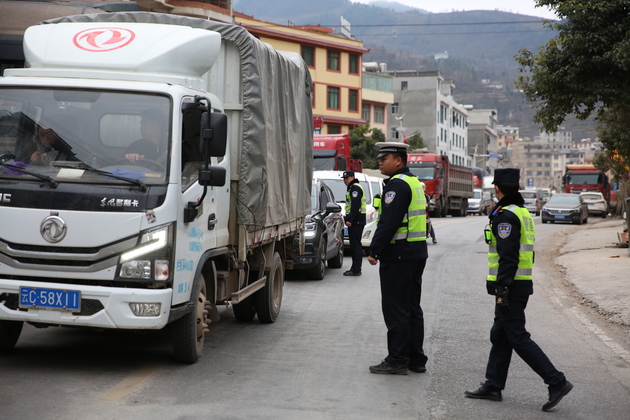
(260120) -- ZHAOTONG, Jan. 20, 2026 (Xinhua) -- Police officers direct traffic in Laodian Town of Qiaojia County in southwest China's...